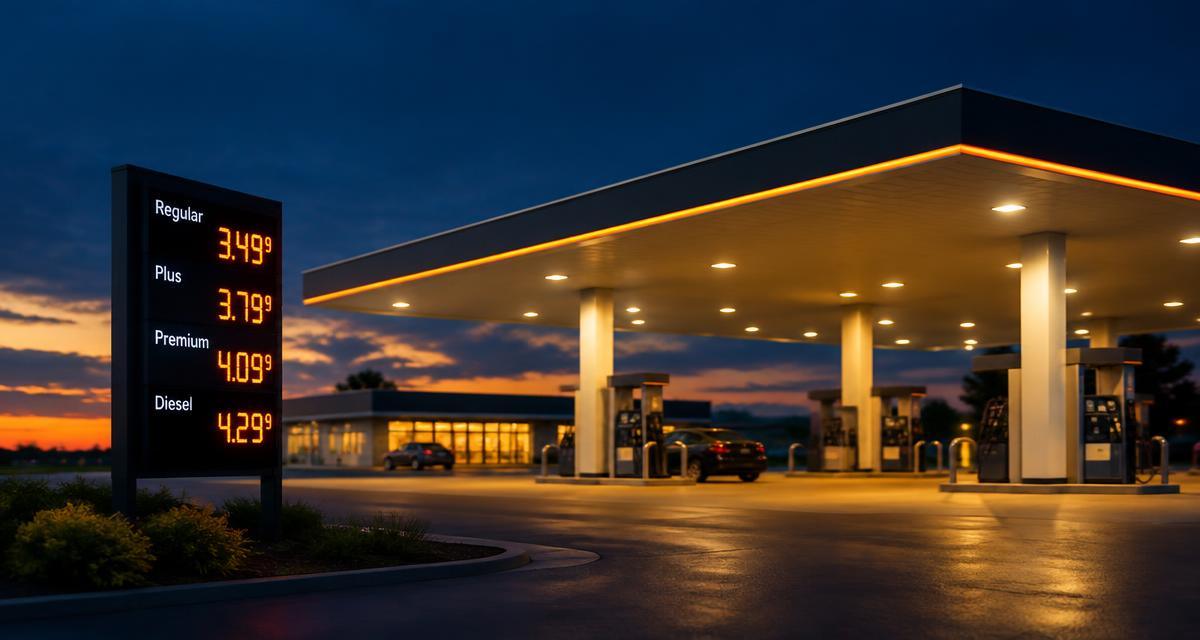
Gas station pricing works best when each price decision answers a commercial question: will this position improve site contribution after the volume response and associated costs? A nearby sign is an important signal, but it is not an instruction. Your costs, traffic access, service proposition and customer mix may support a different position. Start with reliable daily trading information, then decide when matching, holding or moving ahead of competitors makes financial sense.
What should gas station pricing actually optimise?
Optimise controllable contribution across fuel and the convenience store, subject to supply, safety and operating constraints. Pump margin alone can reward a price that loses valuable transactions. Volume alone can reward a discount that creates more activity but less cash. Keep fuel contribution, store gross profit and incremental transaction costs visible together, while avoiding any double counting of card fees or other deductions already included in margin.
Define the measurement boundary before discussing tactics. Compare selling prices and product costs on the same tax basis, use the same grade and unit, and distinguish delivered replacement cost from the accounting cost of stock already held. Both cost views can inform decisions, but switching between them silently makes yesterday's price look better or worse for reasons unrelated to trading performance.
Which competitor fuel prices should you track?
Build a competitor set around actual customer alternatives rather than a fixed radius. A petrol station across a divided road may be less relevant than one farther along the same commuter route. Consider access, opening hours, queueing, grade availability, payment acceptance and whether commercial vehicles can enter comfortably. Record why each competitor matters so that the comparison remains useful when managers change.
Capture the time, grade, displayed price and any membership or payment conditions with each observation. Separate a generally available price from an offer that requires a subscription or another purchase. A stale observation should not trigger an automatic change. When visibility is uncertain, verify the information through a permitted method and retain an audit trail rather than treating a missing observation as evidence that a competitor has held.
How should a site define its price gap?
Choose a consistent reference competitor or an explicitly defined competitor basket. Express the gap as your displayed price minus the reference price: a positive result means your site is higher. Do not switch the reference halfway through a test simply because another sign becomes more convenient. Keep local observation and independent decisions separate from any communication with competing operators; obtain jurisdiction-specific competition-law advice where needed.
How much extra volume must a fuel price reduction generate?
Start with a contribution bridge before changing the sign. In an illustrative example, a site sells 20,000 litres daily at a contribution of 8 cents per litre before fixed operating expenses. Reducing the selling price by 1 cent, with product cost and unit deductions unchanged, reduces that contribution to 7 cents. Existing daily fuel contribution falls from $1,600 to $1,400 before any customer response.
Illustrative example: 20,000 × 8 ÷ 7 = approximately 22,857 litres daily, or about 14.3% additional volume. Costs and prices use a consistent tax basis.
In that example, approximately 2,857 extra litres merely restore the original fuel contribution. If the additional customers also buy store products, include only the incremental store gross profit after relevant variable costs. Do not credit all store sales to the price change. Existing customers may shift purchase timing, and some additional fuel buyers will never enter the c-store. Test those assumptions against transactions rather than treating them as guaranteed benefits.
The reverse calculation matters too. A price increase may improve contribution even if volume declines, but the decision is not complete until repeat visits and store purchases are considered. Set a clear review period and loss threshold before the change. This prevents an operator from defending a favourite price position indefinitely while explaining away every unfavourable result as temporary noise.
How do you estimate price elasticity without misleading yourself?
Price elasticity describes percentage volume change relative to percentage price change. For local decisions, the customer response to your gap against competitors can be more informative than a change in your absolute selling price. Keep the concepts separate: a gap-versus-volume plot is a diagnostic, not an elasticity estimate by itself. Competitor reactions, road conditions and the trading calendar can move volume at the same time.
Compare matched weekdays and similar operating hours. Flag holidays, deliveries that interrupted sales, unavailable grades, major weather changes and unusual fleet orders. Where possible, alternate a defined test position with a baseline across comparable periods, while recording competitor moves. A short run of observations can guide the next experiment, but it cannot justify precise claims about a permanent demand curve.
What should a practical pricing test record?
Write the hypothesis in advance: for example, narrowing a positive price gap may recover enough commuter visits to improve contribution. Record the starting position, permitted change, observation window, stop condition and accountable manager. Evaluate daily litres, net unit contribution, total fuel contribution, store gross profit and transaction count together. Keep the original hypothesis visible even if the result is commercially disappointing.

What daily controls keep fuel pricing decisions consistent?
Assign one decision owner and a backup, with documented authority limits and a route for exceptions. Check that the sign, pump and point-of-sale prices agree after every approved change. Keep a time-stamped log of the reason, expected effect and actual implementation time. A sound strategy fails operationally if the customer sees one price and the till charges another.
Use Andrils Daily to connect competitor observations with daily margin, cash reconciliation and site performance. The purpose is a repeatable decision record, not constant sign changes. Review whether actual results matched the expected bridge, separate execution errors from commercial outcomes, and carry forward the evidence. A decision that fails a properly designed test can still improve the next decision.
When should you hold a premium or change your positioning?
A premium can be rational where customers value reliable access, service, product availability or an efficient visit. It must still survive measurement. Segment commercial accounts and retail traffic when their terms differ, and examine whether a stronger store proposition changes basket contribution. Do not assume a service improvement permits a particular premium; establish the relationship through comparable trading evidence and customer behaviour.
If a persistent pricing disadvantage comes from supply terms, brand obligations or a proposed rebranding, separate that structural issue from daily execution. Andrils Deals provides advisory support on supply contracts and branding decisions. Keep the daily pricing owner focused on the options actually available today while evaluating longer-term changes with a distinct financial case, contractual review and implementation plan.
Close the weekly review with a decision rather than a dashboard tour: retain the current position, run another controlled test, or address a measurement problem. State the expected contribution effect and who will verify it. A disciplined fuel station can respond quickly without becoming reactive, because every move is anchored to a commercial objective and a clear record of what happened next.
Which exceptions should trigger a pricing review?
Treat a sudden volume decline as a diagnostic question before assuming the price is wrong. Check dispenser availability, opening hours, road access and the completeness of transaction data. Confirm that a fleet customer has not simply changed its delivery or purchase day. Where a competitor has moved, establish whether the new price applies to the same product and customer conditions. This sequence prevents a price reduction from becoming the default response to every operational problem.
Set separate escalation routes for a suspected recording error, an unexpectedly weak commercial result and a structural constraint. The first needs reconciliation, the second needs a test review, and the third may need a contract or investment decision. Document who can authorise an exceptional move and when normal controls resume. Local judgement remains valuable, but an exception should leave a clearer decision trail, not a weaker one.
Keep customer communication accurate throughout the test. Update all required displays and ensure staff can explain payment conditions without promising future prices. When comparing results across sites, preserve each location's baseline rather than assuming that the same gap will produce the same response everywhere. A repeatable method is transferable; a specific price position may not be.