Buying a gas station means acquiring a trading operation whose performance depends on property rights, buried infrastructure, supply arrangements and everyday controls. Due diligence tests whether the business you expect to acquire is the one the evidence supports. For an owner selling a petrol station, the same process is an opportunity to resolve uncertainties before they become late-stage price negotiations. Start with a defined transaction perimeter and a clear list of decisions the review must support.
What should you check before buying a gas station?
Agree whether the proposed M&A transaction transfers assets or shares, and whether the land is freehold or leased. Record what is included: operating rights, equipment, fuel inventory, convenience store stock, contracts, employees and liabilities. Appoint owners for financial, legal, environmental and technical workstreams. Andrils provides advisory support; local lawyers, tax advisers and qualified technical specialists should address matters requiring their professional judgments or certifications.
Create a controlled data room with indexed folders and a request tracker. Each request needs an owner, status, due date and explanation of the decision it supports. Give material issues a route to escalation rather than burying them in long question lists. Distinguish a missing document from an adverse finding: both require action, but neither should be resolved by unsupported reassurance from either side of the transaction.
Which documents belong in the due diligence checklist?
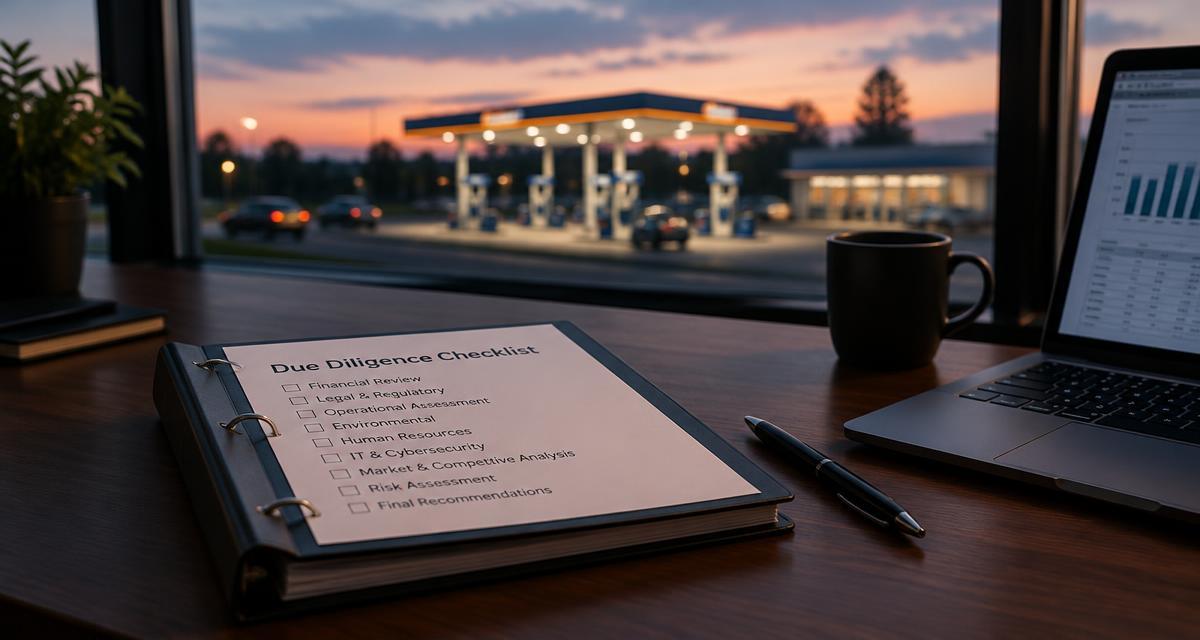
Use the checklist below as a starting framework, then tailor it to the jurisdiction, transaction structure and site. Request original executed agreements and underlying records, not only summaries. Where evidence conflicts, retain the versions and obtain an explanation. A seller’s willingness to explain a discrepancy is useful, but the explanation still needs to reconcile with source documents and the proposed completion arrangements.
| Area | What to check | Documents to request | Red flags |
|---|---|---|---|
| Transaction perimeter | Assets, entities and liabilities transferred | Asset register, entity chart, draft terms | Supplier-owned equipment presented as seller-owned |
| Financial earnings | Recurring profit and proposed adjustments | Monthly accounts, ledgers, bank statements | Unsupported add-backs or unexplained cash gaps |
| Fuel trading | Volumes, realized margins and rebates | Pump sales, invoices, delivery notes, rebate terms | Volume or margin records do not reconcile |
| Wetstock | Loss trends and investigation controls | Tank readings, reconciliations, alarm logs | Repeated unexplained losses or ignored alarms |
| Environmental | Historic uses, releases and remediation | Assessments, incident files, regulator correspondence | Open incidents or missing investigation records |
| Tanks and dispensers | Ownership, condition and testing | Installation records, test reports, service logs | Overdue testing or unresolved defects |
| Property and access | Title, tenure, boundaries and access | Title documents, leases, surveys, easements | Access depends on undocumented arrangements |
| Supply and branding | Assignment, exclusivity and exit obligations | Executed contracts, amendments, support schedules | Consent uncertainty or undisclosed repayment duties |
| Licences and permits | Validity, conditions and transfer process | Operating licences, permit registers, notices | Nontransferable permission without replacement plan |
| Convenience store | Gross profit, stock quality and shrinkage | Category reports, stock counts, supplier terms | Obsolete stock or unexplained margin changes |
| Employees | Transfer rules, accrued benefits and staffing | Contracts, payroll, leave records, disputes | Unrecorded obligations or critical owner dependence |
| Tax | Filing status and transaction exposures | Returns, payment records, authority correspondence | Unresolved assessments or inconsistent tax treatment |
| Capital expenditure | Replacement needs and committed spending | Condition surveys, quotes, orders, warranties | Deferred essential repairs excluded from forecasts |
| Technology and payments | System access, settlement and data rights | Provider contracts, settlement files, access register | Nontransferable accounts or reconciliation gaps |
| Insurance and claims | Cover, exclusions and open claims | Policies, claims history, renewal correspondence | Environmental exclusions or uninsured incidents |
| Completion mechanics | Stock count, working capital and handover | Draft completion schedule, count protocol, consents | Undefined inventory valuation or missing approvals |
Do not mark a workstream complete merely because documents have been uploaded. Completion means that the reviewer has tested the relevant assertion, recorded exceptions and agreed the next action. Use cross-references so a tank condition finding appears in the capital plan, valuation model and contract discussion. Keep sensitive employee and customer information restricted, and use appropriate competition-law safeguards when parties exchange commercially sensitive information.
How do you verify earnings and fuel margins?
Reconcile reported sales to point-of-sale records, card settlements, cash deposits and ledger entries. For fuel, connect opening stock, deliveries, sales and closing stock, allowing for documented measurement conventions. Compare realized gross profit with supplier invoices and contractual rebates. Keep litres and gallons consistent and distinguish retail prices inclusive of taxes from the net revenue basis used in the accounts. Unit errors can make an apparently precise margin calculation meaningless.
Test the controls behind the numbers
Inspect shift reconciliation, cash exceptions, stock adjustments and approval trails rather than relying on monthly totals. Ask who investigates wetstock variances and how unresolved items are carried forward. Review convenience store gross profit by category, including wastage and shrinkage. Then test whether staffing and utilities reflect actual operating hours. A business dependent on unpaid owner labor needs an explicit replacement-cost adjustment before its earnings can support a valuation.
For an illustrative example, assume the seller reports $360,000 of annual EBITDA and proposes a $25,000 nonrecurring expense add-back. If replacing owner duties requires another $45,000 of annual payroll, normalized EBITDA becomes $340,000. Test both adjustments against evidence before using that figure. Andrils Daily combines a subscription platform and expert team for daily reconciliation and performance analysis, helping establish the operational records that make this review more reliable.
Hypothetical inputs illustrate the review process; they are not market benchmarks or a valuation conclusion.
What does environmental due diligence need to establish?
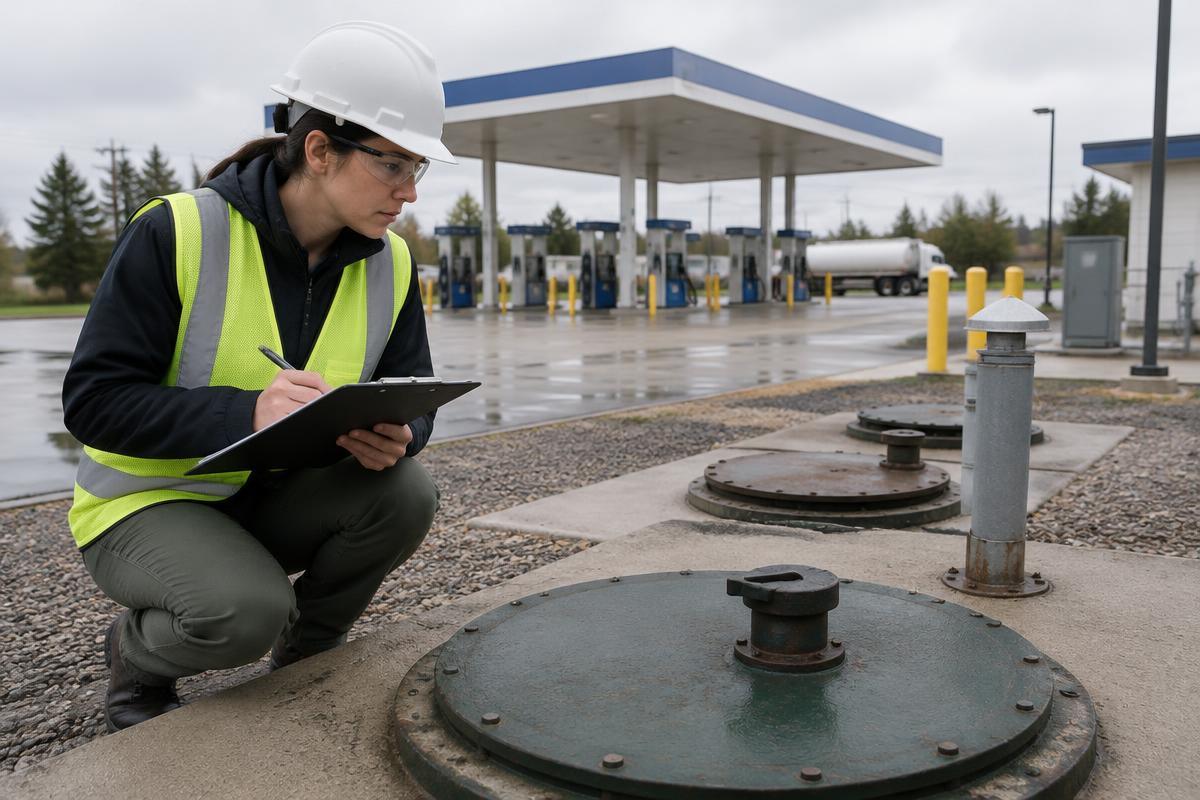
Ask a qualified environmental specialist to define a scope appropriate to the site and local requirements. An initial review typically considers historical uses, available records, site observations and potential sources or pathways of contamination. Where evidence warrants further investigation, the specialist should advise on sampling and testing. The absence of a recorded spill does not prove absence of contamination, and a clean-looking forecourt says little about conditions below ground.
Review tank and pipework installation details, integrity testing, leak detection, maintenance records and incident responses together. Establish who owns the infrastructure and who bears monitoring, removal or remediation obligations. Consider whether contamination could extend beyond the property boundary. Environmental liability can depend on local law as well as contractual allocation, so neither a purchase structure nor a seller indemnity should be assumed to remove statutory exposure.
Translate findings into decisions
Where a material uncertainty remains, decide whether to investigate before signing, make completion conditional on defined evidence, or stop the transaction. Obtain specialist estimates with stated scope and uncertainty rather than inventing a single cleanup allowance. If retention or indemnity protection is considered, legal advisers should address duration, limits, enforceability and security. The seller’s ability to meet a future claim matters as much as the wording of the promise.

How long should fuel station diligence take?
Plan around dependencies rather than announcing a fixed deadline before the records are assessed. Financial analysis, contract review and site inspection can run in parallel, while landlord consent, technical investigation or permit processes may determine the critical path. The illustrative chart allocates reviewer effort by workstream; it does not predict elapsed transaction time. Calendar duration also depends on document readiness, specialist availability and how quickly exceptions are resolved.
For sellers, readiness can improve the process without guaranteeing a particular outcome. Resolve missing signatures, reconcile inventory differences and organize maintenance evidence before launching the sale. Disclose known issues accurately through the process agreed with legal advisers. For buyers, set a minimum evidence standard before exclusivity begins, and avoid committing to a completion date that assumes unresolved environmental or consent questions will disappear.
How should diligence findings change the deal?
Separate matters that change sustainable earnings from matters that create a specific liability or future investment. An earnings adjustment may change enterprise value; a working-capital shortfall belongs in the agreed completion mechanism. A supply consent can be a condition to completion, while a known dispute may need tailored protection. Avoid deducting an item twice simply because it appears in both the financial report and the legal issue list.
Inspect the site during representative trading conditions, subject to safe access and agreed confidentiality arrangements. Compare observed staffing, queue patterns, delivery access and store availability with the seller's operating description. Speak to the relevant managers through an agreed protocol rather than disrupting employees with uncoordinated requests. Physical observations do not replace documentary testing, but they help identify questions that a remote data room review can miss. Record the date and limitations of each visit so temporary conditions are not mistaken for established trading patterns.
Agree how completion inventory will be measured and valued before the final count. Fuel quantity, measurement conventions, ownership and tax treatment need a documented basis, while convenience store stock requires rules for damaged, expired or unsaleable items. Identify goods held on consignment and prevent them from being valued as seller-owned inventory. Specify who attends the count, how disputes are resolved and how results feed into consideration. Retain signed count records and supporting calculations in the completion file. These practical arrangements protect both sides from a last-minute disagreement that is operationally small but commercially disruptive.
Check financing requirements alongside the diligence plan. A lender may need its own property valuation, environmental reliance documentation or evidence of contract continuity. Confirm these requirements early so the parties do not discover a new condition after commercial terms are agreed. Keep a record of which assumptions have been accepted by the buyer and which remain subject to third-party review. The sale agreement and funding documents should describe compatible completion conditions rather than relying on informal understandings.
Use Andrils Deals advisory to connect commercial diligence with valuation and negotiation priorities. Agree the stock-count method, title transfer, payment-provider transition, utility readings, keys, system access and staff communications before handover. Record who owns unresolved actions after completion and when evidence is due. A defensible acquisition decision is not one with no risks; it is one where material risks are understood, allocated and compatible with the buyer’s operating and financing capacity.